 Reviews


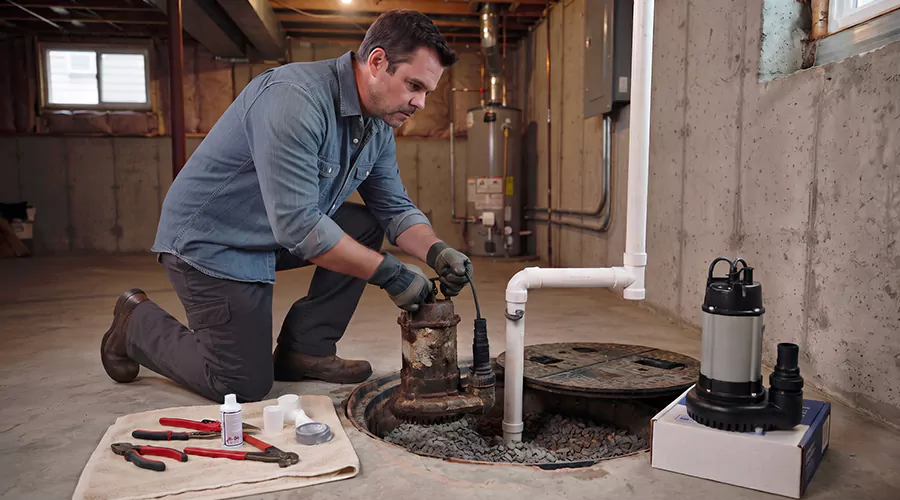
Yes. A sump pump swap in an existing pit is a two-hour DIY job costing $150 to $400 total against $645 to $2,120 for professional replacement with an average of $1,363. No concrete work and no new wiring means no license required.
The honest caveats are short. The pit must already exist and the outlet must already work and the old pump must come out of standing water safely.
Half the "dead pump" calls also turn out to be one cheap part. Check the parts section before buying a whole unit.
Repair Parts vs Full Replacement
Four replaceable parts fake pump death convincingly. Each costs a fraction of a new unit and swaps in minutes. Rule them out before shopping for motors.
- The switch: Sump pump switch replacement fixes a healthy motor that never gets the start signal. Stuck or failed switches lead all pump service calls.
- The float: Sump pump float switch replacement covers the drowned or jammed bobber that rides the water level. A tethered sump pump float replacement costs under $25 and clips onto the existing cord path.
- The check valve: Sump pump check valve replacement stops the pump from re-pumping its own water after every cycle. The part costs $15 and takes five minutes while the pipe is open.
- The impeller: Sump pump impeller replacement makes sense only on premium cast iron units where the part is sold separately. Budget pumps price the impeller and the pump nearly the same.
Age settles ties. A part-level fix on a pump past the typical 7 to 10 year lifespan just schedules the full swap for a rainier day.
Insider tip: Test the switch before condemning the motor. Lift the float by hand with the pump plugged in and a hum with no spin blames the motor while silence blames the switch.
Pick the New Pump
Matching beats upgrading for a smooth swap. A new sump pump that matches the old unit's horsepower and voltage and discharge size drops into the existing plumbing without adapter surgery. Photograph the old pump's label before the store trip.
Type decides the difficulty. Submersible sump pump replacement means pulling the old unit up out of the water by its handle rather than its cord. Meanwhile, pedestal sump pump replacement is the easier version since the motor sits above the pit on a column, and pedestal units cost $60 to $170 and can last up to 25 years.
Material sets the lifespan math. A $155 cast iron pump lasting 12 years costs about $12.90 per year against $15 per year for a $90 plastic unit replaced twice.
Insider tip: buy a vertical-float model for narrow pits. Tethered floats need swing room that small basins can't spare.
Tools and Supplies
Everything for the swap fits in one bucket. The specialty purchases total under $30. Stage it all at the pit before unplugging anything.
- Hacksaw or PVC cutter for the discharge pipe.
- New check valve since the old one never gets reused.
- PVC coupling or union plus primer and cement.
- Channel-lock pliers for fittings.
- Drill with a 3/16-inch bit for the weep hole.
- Towels and a trash bag for the old dripping unit.
- Five-gallon bucket for the test at the end.
One addition upgrades every future swap. Install a union fitting above the check valve and the next replacement becomes a two-minute twist instead of a saw session.
Basement Sump Pump Replacement Step by Step
Basement sump pump replacement runs in eight steps from unplug to test. To replace a sump pump in basement pits you need one afternoon and zero plumbing experience. Work the order exactly.
- Unplug the pump at the outlet. Never work on a plugged-in unit even briefly.
- Cut or disconnect the discharge pipe above the check valve. A union unscrews while glued pipe takes the saw.
- Lift the old pump out by its handle and set it straight into the trash bag.
- Clean the pit. Scoop debris and gravel off the bottom since grit is what killed the old impeller.
- Set the new pump on a solid base. A paver on the gravel gives the pump a sturdy platform and keeps the intake out of the mud.
- Check the float clearance. Run the float up and down by hand and confirm nothing obstructs it.
- Assemble the discharge. Attach the new adapter and pipe stub to the pump before lowering it when space is tight.
- Reconnect and secure the cord to the pipe with zip ties clear of the float's path.
The fastest way to change sump pump units is a same-model match from the buying section since every measurement above repeats identically.
Insider tip: Pour a little water in before final pipe glue-up. A dry-fit test flush catches a bad float position while everything still comes apart.
The Check Valve and Weep Hole
Two small details decide whether the new pump lives its full lifespan. Both install in ten minutes during the discharge hookup. Skipping either one is the classic rookie mistake.
The valve stops the rerun. Install the new check valve on the vertical pipe with the arrow pointing away from the pump so ejected water can't fall back and restart the cycle. The hole beats the air lock: drill a 3/16-inch hole in the discharge pipe between the pump and the check valve angled downward.
Expect the spray. A thin stream shooting back into the pit during operation is normal and necessary because that tiny relief hole prevents the air lock that leaves pumps pushing air while basements flood.
Battery Backup Swaps
Backup systems replace on two different schedules. Sump pump battery backup replacement means the whole secondary pump unit while sump pump backup battery replacement means just the battery feeding it. Confusing the two wastes hundreds.
The battery goes first every time. Backup batteries last roughly 3 to 5 years and swap like a car battery with the terminals matched. The backup pump itself lasts as long as any pump and only replaces when its own motor or switch dies.
Test both after any main pump work. Unplug the primary and pour water until the backup fires since a backup that never gets tested is a decoration with terminals.
Insider tip: Write the install date on every battery with a paint marker. The date answers the replacement question before corrosion does.
Test the Whole System
The five-gallon test proves the swap before the next storm does. Pour water into the pit until the float rises and watch one complete cycle. Three checks confirm success.
- The pump starts and the water drops fast: Slow draining means a discharge blockage or a reversed check valve.
- The valve thuds once at shutoff: Silence or immediate re-cycling means the valve failed or sits backward.
- Water exits outside where it should: The discharge should release 10 to 20 feet from the foundation.
The full basement pump system passes only when all three land. Repeat the pour test quarterly, and a screen over the pit keeps debris out of the new impeller between tests.
What Replacement Costs in 2026?
Sump pump replacement pricing rewards the DIY route more than almost any plumbing job. The pit already exists so you're paying for a machine and an hour of fittings. The table shows every 2026 path.
| Path | 2026 cost |
|---|---|
| DIY parts-level repair | $15 to $60 |
| Full DIY swap | $150 to $400 |
| Pro swap in existing pit | $650 to $1,200 |
| Pro replacement average | $1,363 |
| Battery backup add-on | Several hundred dollars |
The insurance math frames it all. Water damage to a finished basement runs $10,000 to $30,000 or more, which makes even the professional column cheap against one failure during a storm.
When to Call a Professional?
Four situations move this swap out of DIY hands. Each involves conditions rather than skill. The standard dry-pit swap never requires the call.
- Standing water covers the basement floor: A flooded room around electrical equipment is a live hazard.
- No grounded outlet exists nearby: A new dedicated GFCI circuit is electrician work, and extension cords are never a legal substitute.
- The pit is undersized or collapsin: Basin work means concrete and that's the install project rather than the swap.
- The discharge line froze or clogged underground: Exterior line work can require digging.
An annual professional check earns its fee on finished basements since a yearly inspection verifies the float and discharge before storm season tests them.
Conclusion
A sump pump swap is one lift and two pipe joints and a $15 valve in an existing pit. Check the switch and float first because cheap parts fake motor death constantly. Flooded floors and missing outlets belong to pros. This week pour a bucket into your pit and time the cycle. Two free minutes tells you whether you're reading this article early or exactly on time.
FAQs
How do I know what horsepower to buy?
Match the old pump's label. Upsize to half-horse only for deep pits or discharge lifts over 10 feet.
Can I reuse the old check valve?
No. The valve costs $15 and a worn flapper inside silently halves the new pump's efficiency.
Why does my new pump run longer than the old one did?
A larger pit draw or a partially blocked discharge line. Longer single runs beat rapid cycling either way.
Do I need to glue every PVC joint?
Glue the permanent runs and put a union or rubber coupling at the pump side. Future-you will send thanks.
How often should the pump get tested?
Quarterly with the bucket test and before every forecasted storm week. Pumps fail silently between rains.
What do I do with the old pump?
Scrap metal recyclers take cast iron and steel units free. The plastic ones go out with regular trash in most areas.